
ADHD Assessment
ADHD assessment and diagnosis for children and teenagers in Derby and Derbyshire
We provide comprehensive ADHD assessments for children and teenagers in Derby and Derbyshire, led by experienced Clinical Psychologists. Our assessments include cognitive testing as standard, ensuring that families and schools gain a clear understanding of a child’s learning profile, whether or not diagnostic criteria for ADHD are met.
Our ADHD assessment approach
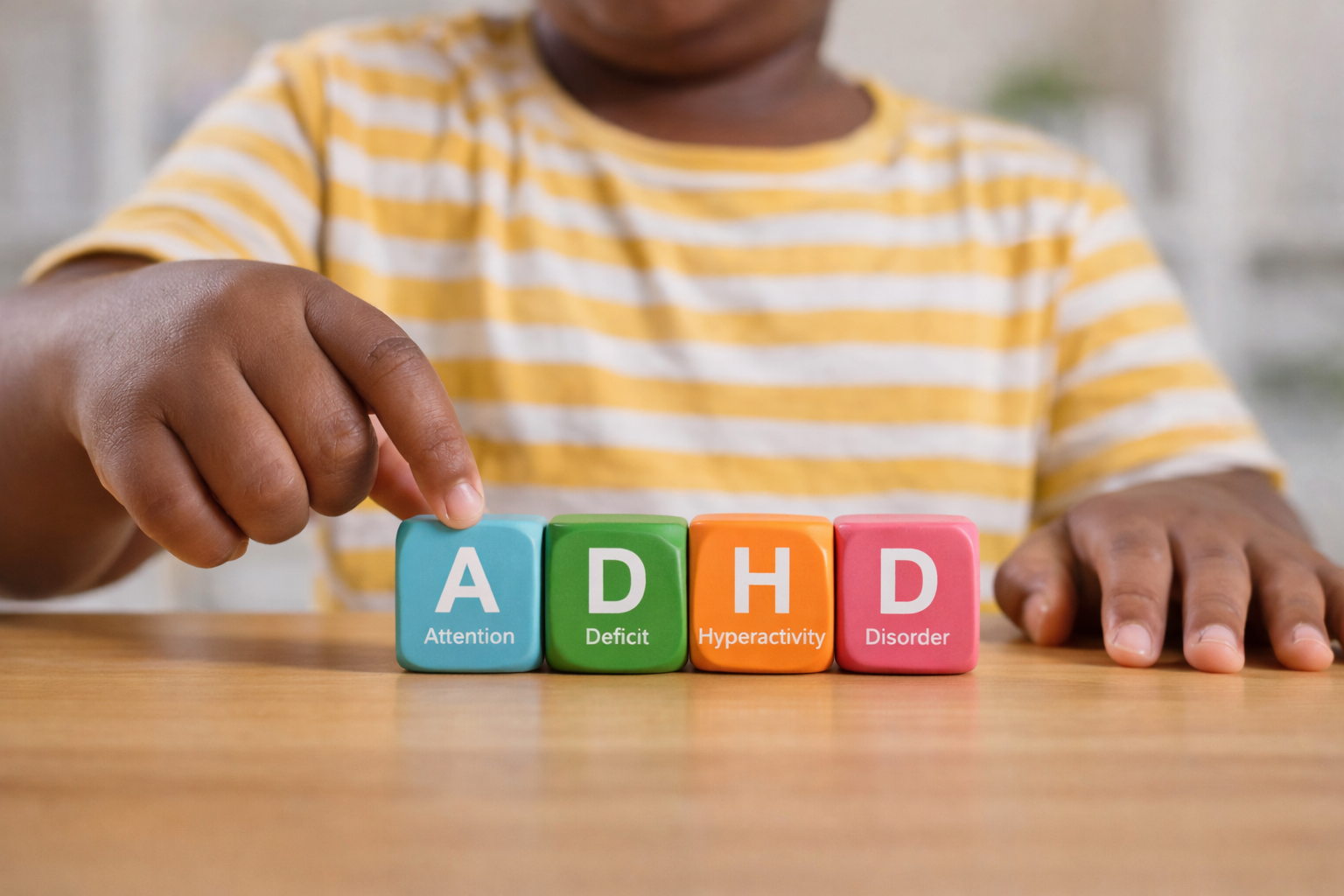
Attention-Deficit Hyperactivity Disorder (ADHD) is a neurodevelopmental condition involving persistent difficulties with attention, impulse control and/or activity levels that impact everyday functioning across settings. Assessment explores whether these patterns are developmentally significant, longstanding and evident both at home and at school.
At The Child Psychology Hub in Derby, our private assessments are designed to provide clarity rather than simply a label. We look carefully at a child’s attention and behavioural profile alongside emotional wellbeing and learning needs, so that outcomes are meaningful and practically useful for families and schools.
All assessments follow NHS and NICE (National Institute for Health and Care Excellence) guidance. We go beyond minimum requirements to ensure assessments are thorough, evidence-based and widely accepted by schools and other professionals. Reports include clear, practical recommendations and may be used as supporting evidence for Education, Health and Care Plans (EHCPs).
Cognitive testing included as standard
As part of our ADHD assessments, cognitive testing is included as standard. This allows us to develop a detailed picture of how a child learns, including strengths, processing style and areas of difficulty that may be contributing to challenges in the classroom.
This means that whether or not a child meets diagnostic criteria for ADHD, parents and schools receive valuable information to inform support and planning. Cognitive testing is not routinely included in many private ADHD assessments, despite its importance in understanding learning differences and guiding educational adjustments.
What is included in the assessment?
All ADHD assessments include the following as standard:
Initial screening and referral review
Parents complete detailed screening and referral forms, which are reviewed by a Clinical Psychologist to confirm that an ADHD assessment is appropriate and to guide the focus of the assessment.
In-depth parent developmental interview
A comprehensive 2-hour developmental interview exploring early development, current functioning and ADHD-related behaviours, using validated clinical tools such as the ADHD Child Evaluation (ACE).
Screening for co-occurring mental health and neurodevelopmental differences
Assessment includes screening for common co-occurring mental health difficulties and other neurodevelopmental differences, including autism.
School information and teacher input
With consent, information is gathered directly from a teacher who knows the child well, ensuring that difficulties are understood across settings and that school-based observations inform clinical formulation.
Face-to-face clinical assessment with the child
The child attends clinic for direct observation and assessment, including an age-appropriate interview or play-based session to explore attention, behaviour and emotional regulation.
QbCheck objective attention testing
A computer-based assessment in clinic measuring activity level, inattention and impulsivity, with results compared to same-age peers with and without ADHD. QbCheck is an FDA-cleared and TGA-registered medical device and takes approximately 15–20 minutes to complete.
Cognitive assessment (included as standard)
Formal cognitive testing using the Wechsler Intelligence Scale for Children (WISC) to develop a detailed learning profile. This identifies strengths, processing style and areas of difficulty that may be impacting learning, whether or not ADHD diagnostic criteria are met.
Standardised questionnaires and rating scales
Parents, teachers and, where appropriate, the young person complete validated questionnaires such as the Conners’ rating scales to support diagnostic decision-making.
Comprehensive report and feedback session
All information is integrated into a detailed written report outlining assessment outcomes, clinical formulation and clear, practical recommendations. A one-hour feedback session with the lead clinician is included to discuss findings, answer questions and plan next steps.
Fees
ADHD and Learning Assessment – £1895
This is a fixed cost and includes everything listed above.
You can view feedback from families on our Testimonials page.
If you would like to discuss whether an ADHD assessment is appropriate for your child, please complete the contact form below or email info@thechildpsychologyhub.co.uk to arrange a free 15-minute phone consultation.
What families and schools gain from the assessment
Clarity about whether ADHD diagnostic criteria are met
A clear explanation of the child’s presentation, informed by clinical formulation
A detailed learning profile through cognitive testing
Practical recommendations for home and school
A school-ready report that can support SEN planning and, where appropriate, EHCP evidence
Additional Information
All ADHD assessments include screening for common co-occurring mental health difficulties such as anxiety, depression and obsessive-compulsive symptoms, as well as screening for other neurodevelopmental differences, including autism. Please note that we do not currently offer autism assessments.
Due to the comprehensive nature of our assessments and the need to gather information from multiple sources, the assessment process typically takes up to five weeks to complete. Timescales may vary depending on school response times.
Clinical Psychologists can assess, diagnose and provide psychological and behavioural recommendations but do not prescribe medication. If medication is being considered, this must be initiated by a psychiatrist and managed by a GP. The Child Psychology Hub does not currently have an in-house psychiatrist.
Age range: 6–16 years
Young people aged 16–18 years may be assessed without cognitive testing; please contact us to discuss suitability.